I love coffee. But I’m not very good at metabolizing caffeine, so one cup a day is usually my limit. Because of that, I’ve always felt that my one cup had to be worth it – balanced, comforting, and memorable enough to carry me through the day.
Buying coffee from cafés worked for a while, but I slowly became more aware of how inconsistent coffee could be. The same drink could taste completely different depending on the café, the beans they used, or even which barista was behind the machine that day. Every visit became a small gamble, quietly wondering if today’s cup would live up to my expectations.
That uncertainty eventually pushed me toward brewing my own coffee. At first, it was simple. I didn’t know much about origins, processing methods, or flavor notes. I just followed standardized recipes online, measuring grams carefully and trying to recreate the café experience at home. Over time though, brewing became less about copying recipes and more about understanding what I actually enjoyed.
There’s something incredibly expressive about Ethiopian beans. They often carry bright floral aromas, citrus-like acidity, and fruit-forward flavors that feel vibrant without being overwhelming. Depending on the region and processing method, a cup can remind you of jasmine tea, ripe berries, stone fruit, or even tropical fruit. Unlike heavier, chocolate-forward coffees, Ethiopian coffee feels delicate and layered – almost elegant.
When it’s brewed well, the acidity becomes mouthwatering rather than sharp. The texture is clean and tea-like, yet the fragrance fills the room long before the first sip. Some cups carry a deep sweetness and umami-like richness, while others lean into notes of grape, blueberry, or bergamot. It’s the kind of coffee that makes you slow down and pay attention.
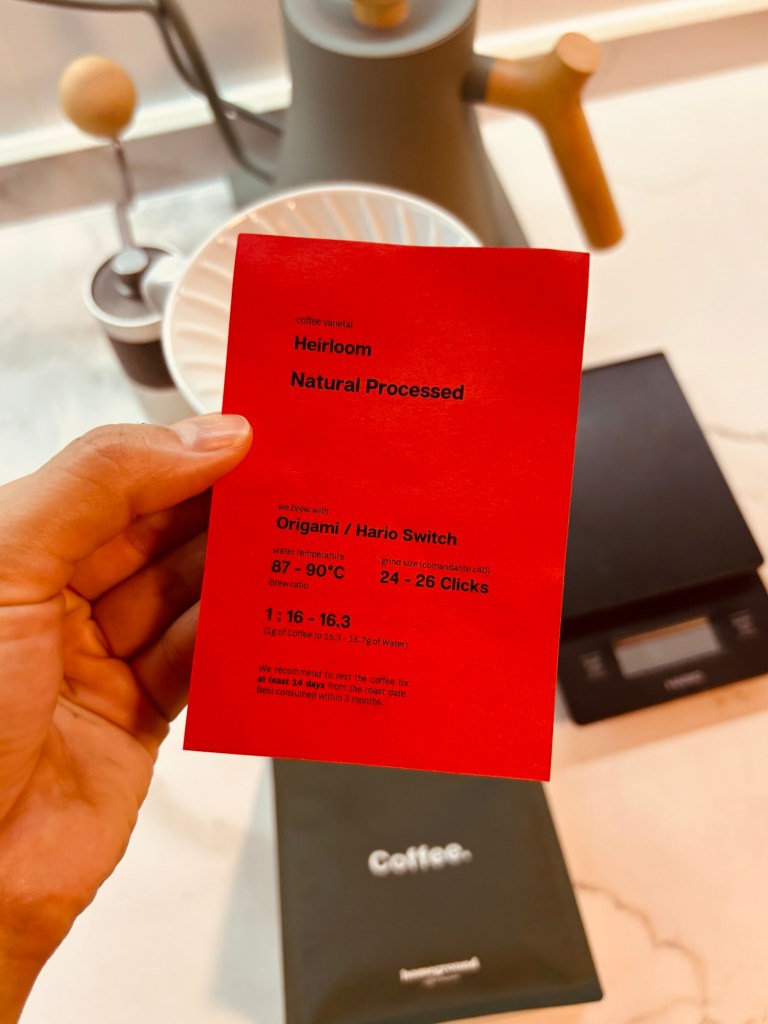
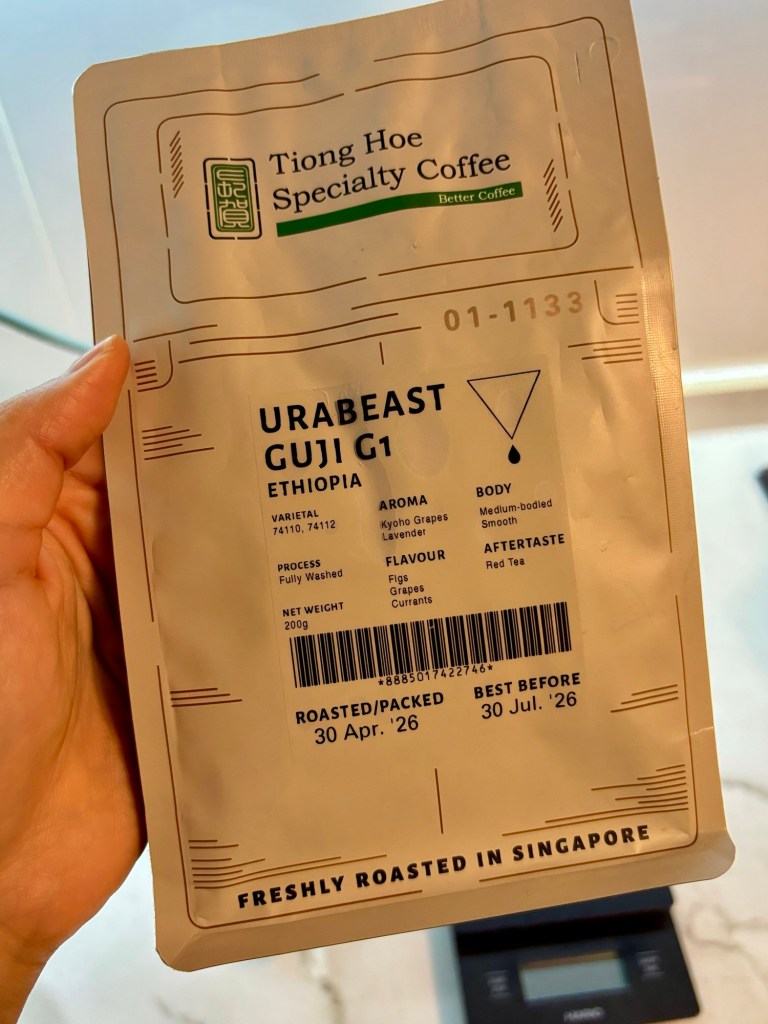
Here are some snaps of recent Ethiopian coffees I’ve tried.
Over time, I realized the recipe matters just as much as the beans. After lots of experimenting, this has become my favorite setup;
- 20g coffee beans
- 250–260g water
- Water temperature: 86–89°C
- Medium-fine grind
- Pour structure: 40g bloom for 30 seconds – 80g circular pour – 80g straight pour – Top up with 50-60g water


Leave a Reply